
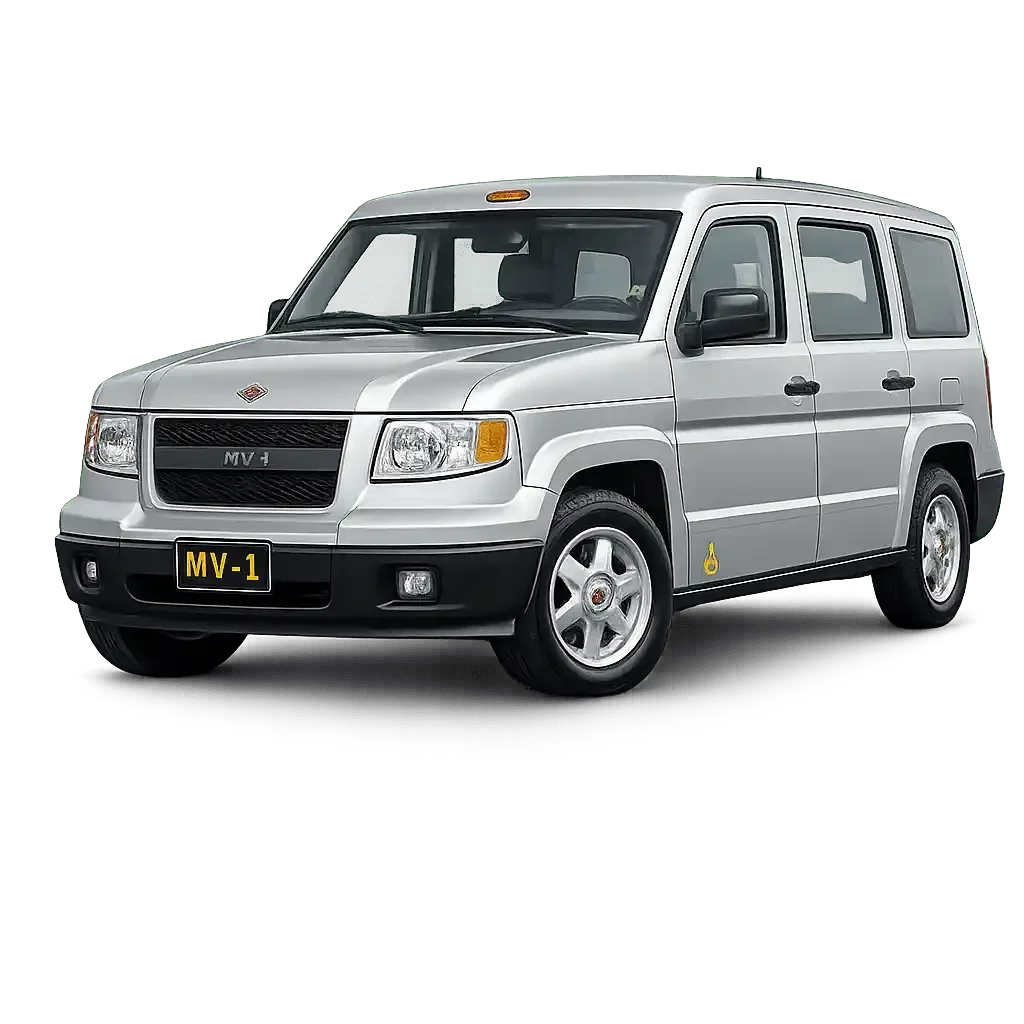
The MV-1 is one of the strangest vehicles in any parts catalog. It is the first purpose-built wheelchair-accessible vehicle manufactured from the ground up in North America, and it was assembled at a former Hummer H2 plant by AM General using Ford Crown Victoria drivetrain components on a Roush-engineered chassis with a custom steel body. It was built under two different corporate names (VPG and Mobility Ventures), went through a bankruptcy and ownership change mid-run, switched from a V8 to a V6 engine partway through production, and was sold simultaneously as a NYC yellow cab, a paratransit fleet vehicle, and a private retail mobility vehicle. If your database lists it at all, it probably lists it wrong. This guide covers every split you need to know.
Brand and Platform Background
The MV-1 stands for "Mobility Vehicle 1." It was the sole product of Vehicle Production Group LLC (VPG), a startup founded in 2006 in Miami, Florida, by Marc Klein and Patton Corrigan. VPG's mission was to build a vehicle designed from the ground up for wheelchair users, rather than retrofitting existing minivans with aftermarket ramps and lowered floors. The vehicle was assembled by AM General at its plant in Mishawaka, Indiana, the same facility that previously built the Hummer H2.
The corporate timeline matters for parts identification and warranty:
VPG era (October 2011 through May 2013): Vehicle Production Group manufactured and distributed the MV-1. Model years 2011, 2012, and 2013. These vehicles are listed under the VPG brand.
Production gap (May 2013 through March 2014): VPG defaulted on a $50 million Department of Energy loan in February 2013 and shut down in May 2013. No vehicles were produced during this period.
Mobility Ventures era (March 2014 through 2016): AM General purchased VPG's assets from the DOE for $3 million and created Mobility Ventures, a wholly owned subsidiary. Production restarted March 11, 2014. Model years 2014, 2015, and 2016. These vehicles are listed under the Mobility Ventures brand, though the vehicle itself remained the MV-1.
This means the same vehicle appears in parts databases under two different manufacturer names: "VPG" for 2011-2013 models and "Mobility Ventures" for 2014-2016 models. Both were built in the same factory by the same workforce. The vehicle's design did not change with the ownership transfer, but the powertrain did change for 2015-2016.
Platform Architecture
The MV-1 uses body-on-frame construction with fully boxed frame rails, derived from a Roush-customized version of the Ford Panther platform (the same basic architecture as the Ford Crown Victoria, Mercury Grand Marquis, and Lincoln Town Car). Key specifications:
Wheelbase: 118 inches
Overall length: Approximately 196 inches
Overall width: Approximately 79 inches
Overall height: Approximately 75 inches
Curb weight: Approximately 6,600 lbs
Drivetrain: Rear-wheel drive
Construction: Body-on-frame, fully boxed steel rails
What Makes It Unique
The MV-1 was not a converted minivan. Every other wheelchair-accessible vehicle on the market starts as a finished production vehicle (typically a Dodge Grand Caravan, Chrysler Pacifica, Honda Odyssey, or Toyota Sienna) and is then modified by an aftermarket converter. The MV-1 was designed, engineered, and assembled as a wheelchair-accessible vehicle from the first bolt. This means:
The ramp system (a side-entry, in-floor ramp rated for 1,200 lbs) is integrated into the original floor structure, not cut in afterward
The side door opening (36 inches wide by 56 inches tall) was designed into the body stampings, not enlarged from a stock door frame
Floor-mounted wheelchair tie-down anchor rails are factory-installed
The front passenger position is designed to accommodate a full-size wheelchair next to the driver
NHTSA crash safety standards were met without aftermarket modifications
ADA (Americans with Disabilities Act) compliance was built in from the design phase
Complete Model, Year, and Trim Breakdown
2011 MV-1 (VPG)
Manufacturer listed as: VPG
Engine: Ford 4.6L Modular V8 (SOHC 2-valve), 248 hp
Transmission: Ford 4-speed automatic (4R70W/4R75E, same family as Crown Victoria)
Fuel options: Gasoline or factory-installed CNG (compressed natural gas) with three Type-3 tanks, approximately 290-mile CNG range
Trim levels: SE (base, $39,950), DX (deluxe, $41,950 and up)
Production start: October 2011
Note: First production MV-1 delivered to Marc Buoniconti. NYC Taxi and Limousine Commission approved as yellow cab October 21, 2011.
2012 MV-1 (VPG)
Manufacturer listed as: VPG
Engine: Ford 4.6L Modular V8, 248 hp
Transmission: Ford 4-speed automatic
Fuel options: Gasoline or CNG
Trim levels: SE, DX
Production note: Assembly paused summer 2012 to retool for the LX trim. Some 2012 production may overlap into early 2013 calendar dates.
2013 MV-1 (VPG)
Manufacturer listed as: VPG
Engine: Ford 4.6L Modular V8, 248 hp
Transmission: Ford 4-speed automatic
Fuel options: Gasoline or CNG
Trim levels: SE, DX, LX (new for 2013: remote keyfob ramp control, stitched leather upholstery, rosewood paneling, chrome accents, different exterior grille treatment)
Production end: February 2013 (loan default), all employees laid off May 2013
2014 MV-1 (Mobility Ventures)
Manufacturer listed as: Mobility Ventures
Engine: Ford 4.6L Modular V8, 248 hp
Transmission: Ford 4-speed automatic
Fuel options: Gasoline or CNG (fleet only for CNG)
Trim levels: SE, DX, LX
Production restart: March 11, 2014
Note: No mechanical changes from VPG-era vehicles. AM General made no engineering revisions to the design it acquired.
2015-2016 MV-1 (Mobility Ventures)
Manufacturer listed as: Mobility Ventures
Engine: Ford 3.7L Ti-VCT V6, 275 hp (replaced the 4.6L V8)
Transmission: Ford 6-speed automatic (6R80, replaced the 4-speed)
Fuel options: Gasoline standard; CNG (4.6L V8, 213 hp) available to fleet buyers only
Trim levels: SE ($39,800), DX ($49,975), LX ($56,995)
Fuel economy (3.7L V6): 14 city / 16 highway / 15 combined mpg
Features by trim:
SE: Manual ramp, basic interior, heavy-duty vinyl seats
DX: Power ramp (electronically deployed), upgraded interior, power windows/locks, cruise control
LX: Remote keyfob ramp control, leather upholstery, real wood interior trim, chrome accents, luxury exterior grille
Production end: 2016 (Mishawaka plant changed hands to SF Motors)
Step-by-Step Fitment Splits
Split 1: Powertrain Generation (V8 vs. V6)
This is the primary mechanical split across the MV-1's production run:
2011-2014 (and 2015-2016 CNG fleet): Ford 4.6L SOHC V8 with 4-speed automatic
2015-2016 (gasoline retail): Ford 3.7L Ti-VCT V6 with 6-speed automatic
These are completely different engines and transmissions. The 4.6L V8 is a Ford Modular engine from the Panther platform family. The 3.7L V6 is from Ford's Duratec/Cyclone family. Nothing interchanges between these two powertrains: engine mounts, transmission mounts, driveshaft, exhaust system, wiring harness, ECU, cooling system, fuel system, and accessories are all different.
CNG complication: The 2015-2016 CNG fleet variant retained the older 4.6L V8 (detuned to 213 hp) even while the gasoline retail versions switched to the 3.7L V6. A 2015 MV-1 could have either engine depending on whether it was a gasoline retail unit or a CNG fleet unit.
Split 2: Fuel System (Gasoline vs. CNG)
The CNG option is a factory-installed system, not an aftermarket conversion. CNG vehicles have:
Three Type-3 compressed natural gas tanks integrated into the vehicle structure
CNG-specific fuel system components (regulators, fuel lines, injectors)
Different engine calibration/ECU mapping
No standard gasoline fuel tank (or a reduced gasoline tank in some configurations)
Different exhaust emissions equipment
Gasoline and CNG fuel system components do not interchange. A fuel filter, fuel pump, fuel rail, or injector listed for the gasoline MV-1 will not fit the CNG version.
Split 3: Manufacturer Name (VPG vs. Mobility Ventures)
The parts are the same regardless of which corporate name is on the title, but the listing name matters for catalog accuracy:
2011-2013: Parts databases list the manufacturer as "VPG"
2014-2016: Parts databases list the manufacturer as "Mobility Ventures"
A buyer searching "VPG MV-1" will not find parts listed under "Mobility Ventures" and vice versa, unless the catalog cross-references them. Both names refer to the same vehicle built in the same factory.
Split 4: Trim Level (Ramp System)
The trim level determines the ramp deployment mechanism:
SE: Manual ramp. The operator physically pulls the ramp out and pushes it back in.
DX: Power ramp. An electric motor deploys and retracts the ramp via a switch.
LX: Power ramp with remote keyfob control. Ramp can be operated from outside the vehicle.
Ramp motors, ramp control modules, wiring for the ramp circuit, keyfob programming, and ramp-related electrical components are trim-specific. The ramp itself (the physical aluminum ramp panel rated at 1,200 lbs) may be the same across trims, but the deployment mechanism differs.
Split 5: Interior Specification
SE and DX: Heavy-duty vinyl upholstery (designed for commercial/fleet use, easy to clean)
LX: Stitched leather upholstery, rosewood or wood-grain interior trim panels, chrome accent pieces, different exterior grille treatment
Seat covers, interior trim panels, door panels, and dashboard trim pieces are specific to the trim level. An LX leather seat assembly will not match an SE vinyl seat frame if the mounting points differ, and the wood trim panels are exclusive to the LX.
Biggest Return Traps
Trap 1: V8 Parts Listed for 2015-2016 Models (or V6 Parts Listed for 2011-2014)
Why they get returned: A seller lists a Ford 4.6L V8 component (starter, alternator, serpentine belt, exhaust manifold) as fitting "MV-1 2011-2016." The 2015-2016 gasoline models use the 3.7L V6. The V8 part does not fit. Conversely, a seller listing a 3.7L V6 oil filter as fitting "2015 MV-1" ships it to a 2015 CNG fleet buyer whose vehicle still has the 4.6L V8.
How to stop returns: Always specify the engine: "4.6L V8" or "3.7L V6." For 2015-2016 model years, also specify gasoline or CNG, since the CNG fleet version retained the V8. Never list any engine or drivetrain part as fitting the full 2011-2016 range without distinguishing the powertrain generation.
Trap 2: Crown Victoria Parts Listed as Direct Fit for MV-1
Why they get returned: The MV-1 uses the Ford Panther-platform 4.6L V8 engine and 4-speed automatic, the same as the Crown Victoria. Sellers assume all Crown Victoria drivetrain parts fit. While many engine internals and transmission components do cross-reference, the MV-1's Roush-customized chassis has different engine mounts, a different exhaust routing (the body is shaped differently from a Crown Vic), different cooling system plumbing (different radiator position and hose routing), and different accessory drive layouts. The 6,600-lb MV-1 also puts different loads on suspension and brake components than a 4,100-lb Crown Victoria.
How to stop returns: Cross-reference the Ford part number, not just the engine code. Engine internals (pistons, rings, bearings, timing components) are likely to cross. External components (mounts, belts, hoses, exhaust) should be verified against MV-1-specific part numbers before listing as compatible. Suspension and brake components should never be assumed to cross without verification due to the significant weight difference.
Trap 3: "VPG MV-1" Parts Not Found by "Mobility Ventures MV-1" Buyers (and Vice Versa)
Why they get returned: A buyer with a 2014 Mobility Ventures MV-1 finds a listing for a "2012 VPG MV-1" ramp motor. The part fits, but the buyer is not sure because the manufacturer name does not match, so they either do not buy or they buy and then return it because they think it is wrong. Alternatively, a seller lists parts under "VPG" only, and buyers with 2014-2016 vehicles never find the listing.
How to stop returns: Cross-list under both names. In the listing title or description, include "VPG / Mobility Ventures MV-1" or "Fits VPG MV-1 (2011-2013) and Mobility Ventures MV-1 (2014-2016)." This ensures searchability and buyer confidence. For parts that span the V8 era only (2011-2014), make that clear as well.
Trap 4: Gasoline Parts Listed for CNG Vehicles
Why they get returned: The CNG option was a factory-installed system with dedicated fuel delivery components. A buyer with a CNG MV-1 orders a fuel filter or fuel pump listed for "2012 MV-1" and receives the gasoline version. The CNG fuel system uses entirely different components from tank to injector.
How to stop returns: For any fuel-system-related part, always specify "gasoline" or "CNG." Include a note: "Does not fit CNG-equipped vehicles" or "CNG application only." If you do not know whether a part is gasoline or CNG-specific, do not list it as universal.
Trap 5: Ramp Components Listed Without Trim-Level Specification
Why they get returned: A seller lists an "MV-1 ramp motor" without specifying the trim. The SE has a manual ramp with no motor. The DX has a different ramp motor configuration than the LX (which adds keyfob remote capability and a different control module). The buyer with an SE receives a power ramp motor they cannot use, or the buyer with an LX receives a DX-spec motor without the remote control module.
How to stop returns: For any ramp-related component (motor, control module, wiring harness, switch, keyfob receiver), always specify the trim level: SE (manual), DX (power), or LX (power with remote). The physical ramp panel itself may cross between trims, but confirm before listing.
Fitment Rules Block
Required attributes for every VPG / Mobility Ventures MV-1 parts listing:
Manufacturer name: VPG (2011-2013) or Mobility Ventures (2014-2016); ideally cross-listed
Model year
Engine: Ford 4.6L V8 (2011-2014 gasoline and all CNG) or Ford 3.7L V6 (2015-2016 gasoline)
Transmission: 4-speed automatic (V8 models) or 6-speed automatic (V6 models)
Fuel type: Gasoline or CNG
Trim level: SE, DX, LX, or Commercial
Ramp type: Manual (SE) or power (DX/LX)
Buyer Confirmation Prompts
Before shipping any part for an MV-1, confirm:
"What model year is your MV-1?"
"Is the manufacturer listed as VPG or Mobility Ventures on your title/registration?"
"Which engine does your vehicle have: the 4.6L V8 or the 3.7L V6?"
"Is your vehicle gasoline or CNG (compressed natural gas)?"
"What is your trim level: SE, DX, or LX?"
"For ramp-related parts: Does your ramp deploy manually (SE), by electric switch (DX), or by remote keyfob (LX)?"
Quick Identification Guide
VPG vs. Mobility Ventures: Check the title, registration, or VIN. 2011-2013 vehicles were titled under VPG. 2014-2016 vehicles were titled under Mobility Ventures. There is no visible exterior badge difference on most vehicles.
V8 vs. V6: Open the hood. The 4.6L V8 is a larger, wider engine with "4.6L" cast or stamped on the intake manifold or valve cover. The 3.7L V6 is smaller with a different intake plenum. If the vehicle is a 2011-2014 model, it almost certainly has the V8 (exception: some very early 2014 production may overlap). If it is a 2015-2016 gasoline model, it has the V6. If it is a 2015-2016 CNG fleet model, it has the V8.
Gasoline vs. CNG: Look underneath the vehicle. CNG vehicles have three large cylindrical compressed gas tanks integrated into the frame/floor area. Gasoline vehicles have a conventional fuel tank. Also check the fuel filler location and type: CNG vehicles have a different fill connection.
Trim level: The easiest identifier is the ramp. Pull the side door handle: if there is no electric motor and the ramp must be pulled out manually, it is an SE. If there is a button or switch to deploy the ramp, it is a DX. If the ramp can be deployed from the keyfob, it is an LX. Interior materials also differentiate: vinyl = SE or DX; leather with wood trim = LX.
LX exterior: The LX has a different grille treatment from the SE and DX. Chrome accents and upgraded trim are visible from outside.
Parts Sourcing Notes
The MV-1 occupies an unusual position in the parts market. Total production across all years was limited (estimated at a few thousand units), which means MV-1-specific body panels, ramp assemblies, interior trim, and wheelchair tie-down components are scarce and typically available only through specialized wheelchair-accessible vehicle dealers and the Mobility Ventures/AM General dealer network.
However, the MV-1's drivetrain is almost entirely sourced from Ford's high-volume parts bin, which is a major advantage for parts availability:
Ford Panther-platform cross-references (4.6L V8 models): The 4.6L Modular V8 and 4-speed automatic transmission are the same family used in millions of Ford Crown Victorias, Mercury Grand Marquis, and Lincoln Town Cars. Engine internals, transmission internals, and many electrical components cross-reference to these high-volume applications. Ford dealer part numbers are the correct starting point for drivetrain components.
Ford 3.7L V6 cross-references (2015-2016 gasoline): The 3.7L Ti-VCT V6 and 6R80 6-speed automatic were used across a wide range of Ford products including the Ford Edge, Ford Explorer, Ford Flex, Ford Taurus, Ford F-150, Ford Mustang, and Lincoln MKS/MKT/MKZ. Engine and transmission parts are well-supported.
Ramp system (ASC-sourced): The in-floor ramp was supplied by ASC (American Specialty Cars), a long-time sunroof and specialty vehicle manufacturer. Ramp components may be available through ASC's successor organizations or through wheelchair-accessible vehicle parts suppliers.
Chassis components: The Roush-customized chassis derived from the Panther platform means that some suspension geometry components may be unique to the MV-1, even though the basic design is Panther-derived. Verify part numbers before assuming Crown Victoria suspension parts will bolt in. The MV-1's 6,600-lb curb weight is approximately 60% heavier than a Crown Victoria, so springs, shocks, and brake components are almost certainly rated differently even if they share similar mounting points.
Body panels and glass: MV-1-specific. The body was designed and tooled exclusively for this vehicle. No other production vehicle shares any body panels, door glass, windshield, or exterior trim with the MV-1. These parts are available only from MV-1-specific sources, salvage yards, or NOS inventory.
Fleet decommission as a parts source: Many MV-1s entered NYC taxi and paratransit service, which means high-mileage decommissioned fleet vehicles are a significant source of used parts. These vehicles typically have high body and interior wear from commercial use, but drivetrain components may still have useful life. Check for CNG vs. gasoline configuration before pulling parts from a fleet vehicle.
Disclaimer: This guide is based on publicly available specifications, VPG press materials, and independent research. Part interchangeability should always be confirmed via VINand OEM part number lookup. Specifications may change without notice. This document does not constitute official VPG parts catalog data. Visuals and illustrations in this article were generated using AI for representative purposes and may not reflect exact technical schematics.