
Written by Arthur Simitian | PartsAdvisory
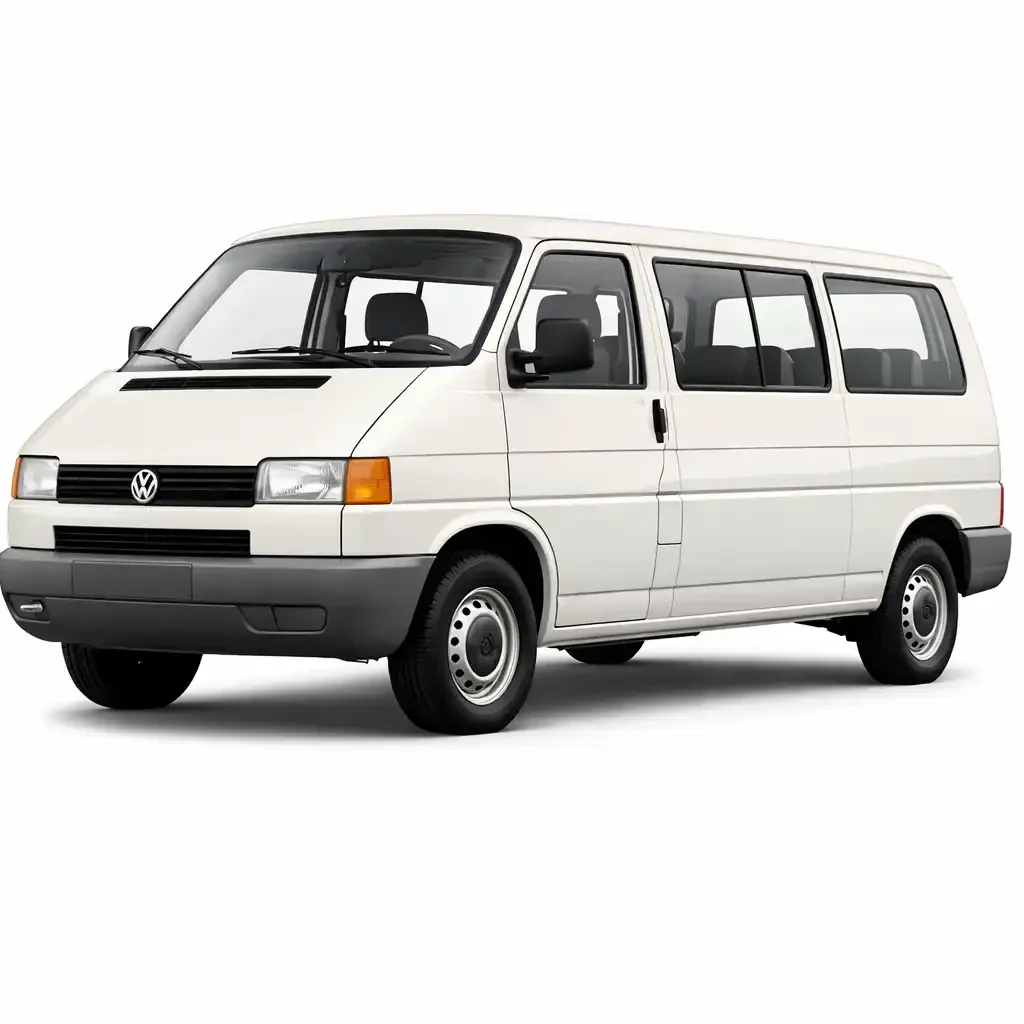
The Volkswagen Transporter T3 passenger van -- sold as the Vanagon in North and South America, the Transporter or Caravelle in Europe, and the Type 25 in the UK -- is the final generation of rear-engine VW Transporters. German production ran from 1979 to 1991. The 1985 to 1994 catalog window covered in this guide captures the Wasserboxer water-cooled era of T3 passenger van production, encompassing the US Vanagon market (1985 to 1991), continued European production, and the tail end of South African T3 production that ran through 2002. For practical catalog purposes the 1985 to 1994 window covers the most commercially active aftermarket population.
For aftermarket parts sellers, the T3 passenger van in the 1985 to 1994 window requires clear qualification across two engine codes (DH and MV) that represent two different water-cooled Wasserboxer generations with different fuel management systems, a hard 1986 model year boundary that changed the engine, injection system, headlights, bumpers, and transmission lineup simultaneously, the Syncro 4WD drivetrain that splits brake, axle, and front end component fitment, and US market vs. non-US market differences in emission specification and ECU calibration. The window also begins with the 1985 model year that straddles the end of the 1.9-litre DH era -- which overlaps with the previous guide covering 1980 to 1985.
This guide maps the 1985 to 1994 production window specifically for the passenger van configuration, with full coverage of the engine boundary, Syncro splits, transmission options, trim levels, and the headlight change that marks the visible boundary between early and late T3 production.
Platform Overview: Rear-Engine, Rear-Wheel Drive, Same Wheelbase as T1 and T2
The T3 shares its 2,400 mm wheelbase with the T1 and T2 predecessors -- a dimensional continuity that runs through all three rear-engine Transporter generations. The body is larger, heavier, and more angular than the T2, with a squared-off "wedge" profile that distinguishes it from the rounded Bay Window.
The T3 suspension is front MacPherson strut and rear independent semi-trailing arm with coil springs -- a more modern architecture than the T2's front beam axle and IRS half-shafts. Suspension components do not cross between T2 and T3.
Front brakes are ventilated discs throughout the T3 production window. Rear brakes are drums on standard 2WD models. The Syncro 4WD variant has different front brake disc specifications depending on wheel size -- 254 mm for 14-inch wheel Syncros and 280 mm for 16-inch wheel Syncros. This brake split is the most commercially significant fitment difference within the T3 passenger van catalog in this window.
The 1986 Model Year: The Central Boundary in This Production Window
The 1986 model year is the single most significant model year boundary in the entire 1985 to 1994 T3 passenger van catalog. Multiple simultaneous changes at this boundary create hard parts splits across engine, fuel system, injection management, exterior lighting, bumpers, and transmission:
The 1.9-litre Wasserboxer (engine code DH, Digijet injection) was replaced by the 2.1-litre Wasserboxer (engine code MV, Digifant injection). These are different displacements, different injection systems, and different ECU architectures -- a complete powertrain change within the same basic engine family.
Rectangular headlights replaced the round sealed beam headlights used on all T3 production from 1979 through 1985. Round and rectangular headlight assemblies are entirely different units with different housings, different bulb configurations, and different wiring connectors.
Larger squared fiberglass bumpers replaced the earlier chrome-plated steel bumpers with plastic end-caps. Bumper mounting hardware and associated front and rear valance trim differ across this boundary.
The air conditioning system was substantially redesigned for improved performance. A/C ductwork and associated interior trim components differ between pre-1986 and 1986-onward production.
A tachometer was added to the instrument cluster for 1986. Instrument cluster and associated dashboard trim are production year-specific.
Any parts listing spanning "VW Transporter T3 1985 to 1991" without a production period qualifier for exterior lighting, bumpers, engine, and injection system components will apply incorrect parts to one side or the other of this boundary.
Engine Variants: Two Wasserboxer Generations
1.9-Litre Wasserboxer (Engine Code DH, Digijet) -- 1983.5 to 1985
The 1.9-litre DH Wasserboxer applies to the 1985 and earlier T3 passenger van in the US market. It uses Bosch Digijet (Digital Jetronic) fuel injection, which manages fuel delivery but not ignition timing -- ignition is managed by a separate system. The DH produces approximately 83 hp.
For the 1985 model year specifically, both the DH (1985 and earlier US production) and MV (1986 US production) engines appear in the 1985 to 1994 window depending on where the cutoff falls. The 1985 calendar year Vanagon uses the DH. The 1986 model year Vanagon uses the MV. Any catalog entry spanning 1985 through 1991 without engine code qualification will apply DH components to MV applications and vice versa for a significant share of listings.
Digijet-specific components: fuel injectors, throttle body, airflow meter (MAF sensor), fuel rail, ECU calibrated for DH/Digijet, coolant temperature sensor for injection. These do not cross to the MV Digifant system.
2.1-Litre Wasserboxer (Engine Code MV, Digifant) -- 1986 to 1991 US Market
The 2.1-litre MV Wasserboxer is the engine for all US market T3 passenger vans from the 1986 model year through the end of Vanagon importation after the 1991 model year. It uses Bosch Digifant engine management, which integrates both fuel injection and ignition timing control in a single ECU -- a more advanced system than the Digijet it replaced. The MV produces approximately 95 hp.
The Digifant ECU manages ignition advance via a Hall sender in the distributor alongside fuel delivery. The ECU is sensitive to poor grounding -- a well-documented T3 owner complaint -- and replacement requires a Vanagon MV-specific Digifant unit. Digifant ECUs from other applications (Golf, Jetta, Corrado) that also use Digifant carry different calibrations and different sensor input configurations and are not confirmed fitments for the MV Wasserboxer without VIN-level verification.
California-specification MV Vanagons carry different ECU calibrations from federal (49-state) specification vehicles to meet California emission standards. California vs. federal specification is a mandatory qualifier for ECU, catalytic converter, O2 sensor, and evaporative emission system listings.
The MV Wasserboxer shares its basic Wasserboxer architecture with the DH -- same gear-driven camshaft (no timing belt), same aluminum case and cylinder heads, same cooling vulnerability to phosphated coolant. However the different displacement (2.1 vs. 1.9 litres) means different bore and stroke dimensions, different head gasket specifications, and different piston and cylinder specifications. DH and MV head gaskets, cylinder head sealing kits, and internal engine components are not interchangeable.
Engine code (DH vs. MV) is a mandatory qualifier for all engine, injection, ECU, exhaust, cooling, and emission component listings across the full 1985 to 1994 window.
Transmission Options
4-Speed Manual (091)
The standard transmission on the T3 passenger van throughout the production window. The 091 manual transaxle was the primary manual option for 2WD models across the full production run.
4+G Manual (Syncro Only)
The Syncro 4WD uses a 4+G transaxle with an additional Gelande (terrain) low-range gear below 1st gear, giving the appearance of a 5-speed with the G gear serving as an off-road crawler ratio. This is a different transaxle from the standard 2WD 091, with different internal components and different mounting configuration.
5-Speed Manual
A 5-speed manual became available on certain configurations. The 5-speed uses the 094 transaxle, which is a different unit from the 4-speed 091. Internal components, gear ratios, and synchronizer specifications differ. Sellers listing manual transmission components must specify transaxle code (091 vs. 094) rather than simply "manual."
3-Speed Automatic
The 3-speed hydraulic torque converter automatic is the same basic unit shared with Audi products of the era, carried forward from the T2 Bay Window. It was not available on the Syncro. Automatic-specific service components -- ATF, filter and gasket kit, and internal components -- are entirely separate from manual transaxle parts. Transmission type (manual vs. automatic) is a mandatory qualifier. The automatic was not offered with the Syncro drivetrain.
Syncro 4WD: The Primary Fitment Split in This Window
The Syncro 4WD variant debuted for the 1985 model year and was available through the end of T3 production. It represents the most significant parts split in the 1985 to 1994 T3 passenger van catalog for drivetrain and brake components.
The Syncro uses a full-time 4WD system engineered by Steyr-Daimler-Puch, assembled at the Puch facility in Graz, Austria. A viscous coupling on the front axle engages automatically when rear wheel slip is detected. Syncro-specific front axle components -- front differential, front driveshafts, CV joints, and front hub assemblies -- have no application on the 2WD Vanagon.
Syncro Brake Specifications
The Syncro was produced in 14-inch and 16-inch wheel configurations, and the brake specifications differ between them in ways that matter significantly for parts fitment.
The 14-inch wheel Syncro uses 254 mm front brake discs -- the same disc diameter as the standard 2WD Vanagon. However the 14-inch Syncro and the 2WD Vanagon are not necessarily confirmed cross-fits for all brake components; verify caliper and hub specifications by part number.
The 16-inch wheel Syncro uses 280 mm front brake discs sourced from VW LT commercial vehicle applications. These are larger rotors and a different specification from both the 14-inch Syncro and the 2WD. The 16-inch Syncro also uses larger rear brakes from the VW LT, and has fender flares to accommodate the wider track and larger tires. The 16-inch Syncro was not sold in the US market -- it was a European and limited-market variant.
Drivetrain (2WD vs. Syncro) and for Syncro, wheel size (14-inch vs. 16-inch) are mandatory qualifiers for all brake, front axle, hub, and CV joint component listings.
Exterior: The Round to Rectangular Headlight Boundary
The headlight change at the 1986 model year is the most visible and commercially important exterior parts boundary in the 1985 to 1994 T3 window.
1980 to 1985 production: round sealed beam headlights with chrome-plated steel bumpers and plastic end-caps. 1986 to 1991 production: rectangular headlights with larger squared fiberglass bumpers and rocker panel trim on higher-specification models.
Round and rectangular headlight assemblies are completely different units. They have different housing shapes, different bulb configurations, and different wiring connections. A round headlight assembly from the 1985 production year will not fit a 1986 vehicle, and vice versa. Any headlight listing spanning 1985 to 1986 without a production period qualifier is applying an incorrect part to one of those years.
Bumper assemblies also differ at this boundary. 1985 and earlier chrome steel bumpers with plastic end-caps are not interchangeable with 1986 and later fiberglass bumpers.
Production year (1985 and earlier round headlights / 1986 and later rectangular headlights) is a mandatory qualifier for all headlight, front bumper, rear bumper, and associated exterior trim listings.
US Market Trim Levels and Westfalia Configuration
The US Vanagon passenger van was offered in multiple trim levels across the 1985 to 1991 production window, and those trim levels changed over the years:
1985: Vanagon, Vanagon GL, Camper GL, Wolfsburg Camper. 1986: Vanagon L, Vanagon GL, Vanagon GL Syncro, Camper GL, Wolfsburg Camper (with and without Syncro). 1987 to 1989: Vanagon GL, Vanagon GL Syncro, Camper GL, Wolfsburg Camper, Wolfsburg Limited Edition. 1989 to 1991: Carat trim added as the top passenger van configuration, Multivan from 1990.
The Westfalia Camper and Wolfsburg Edition conversions were performed at the Westfalia factory in Germany. Westfalia interior components -- cabinetry, fold-out bed mechanism, pop-top roof hardware, and associated electrical (water pump, lighting) -- apply only to Westfalia-converted vehicles. Standard Vanagon, GL, and Carat trim vehicles have fixed roofs.
The Carat trim level, available for 1990 and 1991 US model years only, added power door locks, privacy curtains, and power front windows to the GL content level. Carat-specific electrical components -- power window motors, window regulator mechanisms, door lock actuators -- are trim-level dependent and must be specified as Carat where applicable.
Body configuration (standard passenger van vs. Westfalia Camper) and trim level are required qualifiers for pop-top roof hardware, Westfalia interior components, and Carat-specific electrical components.
Common ACES/PIES Mistakes for 1985 to 1994 Volkswagen Transporter T3 Passenger Van
Treating the full 1985 to 1991 US window as a single engine application. The 1985 DH Digijet and 1986 to 1991 MV Digifant are different displacement, different injection systems, and different ECU architectures.
Cross-referencing Digijet injection components to the Digifant system or vice versa. These are different engine management architectures despite both using fuel injection. ECU, airflow sensor, throttle body, and injector specifications are system-specific.
Cross-referencing Digifant ECUs from Golf, Jetta, or Corrado applications to the MV Vanagon. Digifant is used across multiple VW platforms with different calibrations. The MV Vanagon requires a Vanagon-specific Digifant ECU.
Spanning the 1985 to 1986 headlight boundary in a single headlight listing. Round sealed beam headlights (1985 and earlier) and rectangular headlights (1986 and later) are different assemblies.
Applying 2WD brake components to Syncro applications without wheel size qualification. 14-inch Syncros use 254 mm front discs; 16-inch Syncros use 280 mm front discs from VW LT sourcing. These are different parts.
Listing Syncro front axle and CV joint components as applying to 2WD models. The Syncro front axle is a driven axle with its own CV joints and hub assemblies. 2WD front axle components are non-driven.
Not qualifying California vs. federal emission specification for ECU, catalytic converter, and O2 sensor listings on MV Digifant applications.
Applying DH head gasket or cylinder head sealing components to the MV engine. Different displacement means different bore dimensions and different head gasket specifications.
Listing the automatic transmission as available with the Syncro. The 3-speed automatic was not offered with the Syncro drivetrain.
Applying Westfalia pop-top roof hardware or interior cabinet components to standard passenger van configurations. Westfalia conversion hardware applies to Westfalia-converted vehicles only.
Catalog Checklist for 1985 to 1994 Volkswagen Transporter T3 Passenger Van
Require engine code (DH 1.9-litre Digijet / MV 2.1-litre Digifant) for all engine, injection, ECU, exhaust, cooling, and emission component listings
Require production period (1985 and earlier round headlights / 1986 onward rectangular headlights) for all headlight, bumper, and associated exterior trim listings
Require California vs. federal emission specification for ECU, catalytic converter, O2 sensor, and evaporative emission system listings on MV applications
Require drivetrain (2WD vs. Syncro) for all brake, front axle, hub, and CV joint listings
Require wheel size (14-inch vs. 16-inch) for Syncro brake disc and rear brake specifications
Require transmission code (091 4-speed manual / 094 5-speed manual / 4+G Syncro / 3-speed automatic) for all drivetrain service components
Note that the automatic was not available with the Syncro
Require body configuration (standard passenger van vs. Westfalia Camper) for pop-top roof hardware and Westfalia interior components
Require trim level (Carat 1990 to 1991 only) for power window, door lock actuator, and associated electrical components
Note that the DH and MV Wasserboxer head gaskets and cylinder head sealing kits are not interchangeable -- verify by engine code
Cross-reference Wasserboxer cooling system components -- radiator, water pump, coolant hoses -- to T3-specific applications only; do not cross from T2 or air-cooled T3 applications
Cross-Reference Logic
VW Vanagon 1983.5 to 1985 (DH Wasserboxer, Digijet): The 1985 model year is shared between this guide and the preceding 1980 to 1985 guide. DH engine code and Digijet injection components cross-reference within the 1983.5 to 1985 DH production window. Do not apply DH components to MV applications.
VW Vanagon 1986 to 1991 (MV Wasserboxer, Digifant): The core of the US market window. MV engine code, Digifant injection, and rectangular headlight components define this period and form the majority of the catalog application population.
VW Transporter T3 European market: European T3 production continued beyond the 1991 US market cutoff and offered additional engine options not sold in the US (including diesel variants JX, KY, and other Wasserboxer sub-codes). European market T3 applications require market designation for ECU, emission, and fuel system components.
VW Transporter T4 Eurovan (1993 onward): The successor in the US market. Front-engine, front-wheel-drive platform with no component commonality with the T3. The T4 replaced the T3 in the US market starting with the 1993 model year.
Syncro and VW LT (commercial van): The 16-inch wheel Syncro uses VW LT-sourced brake components. LT front and rear brake components may cross to the 16-inch Syncro where VW specified the LT part. Standard T3 2WD brake components do not cross to 16-inch Syncro specification.
Frame all cross-references as "may also fit" with engine code, production year, drivetrain, and emission specification qualifiers.
Final Take
The 1985 to 1994 Volkswagen Transporter T3 passenger van is the most commercially active T3 catalog window in the North American aftermarket, anchored by the well-documented and enthusiast-supported Vanagon production years of 1985 to 1991. The production window contains two Wasserboxer engine codes with different displacements and entirely different injection systems, a 1986 model year boundary that changed the engine, the headlights, the bumpers, and the air conditioning simultaneously, and the Syncro drivetrain split that divides brake and axle component fitment further by wheel size.
The five attributes that determine correct fitment in this window: engine code (DH vs. MV), production year for exterior components (pre-1986 round headlights vs. 1986 onward rectangular headlights), emission specification (California vs. federal for ECU and catalyst), drivetrain (2WD vs. Syncro plus wheel size for Syncro brake components), and body configuration (standard vs. Westfalia) for roof and camper hardware. Apply all five and the T3 passenger van becomes a precisely cataloged, high-demand entry for one of the most active enthusiast parts communities in the classic VW market.
Disclaimer: This guide is based on publicly available specifications, manufacturer documentation, and independent research. Part interchangeability should always be confirmed via VIN and OEM part number lookup. Specifications may change without notice. This document does not constitute official Volkswagen parts catalog data.