
Volkswagen Pointer (1998–2005): Mexico-Market Gol G2/G3 Hatchback and Wagon Fitment Guide
Written by Arthur Simitian | PartsAdvisory
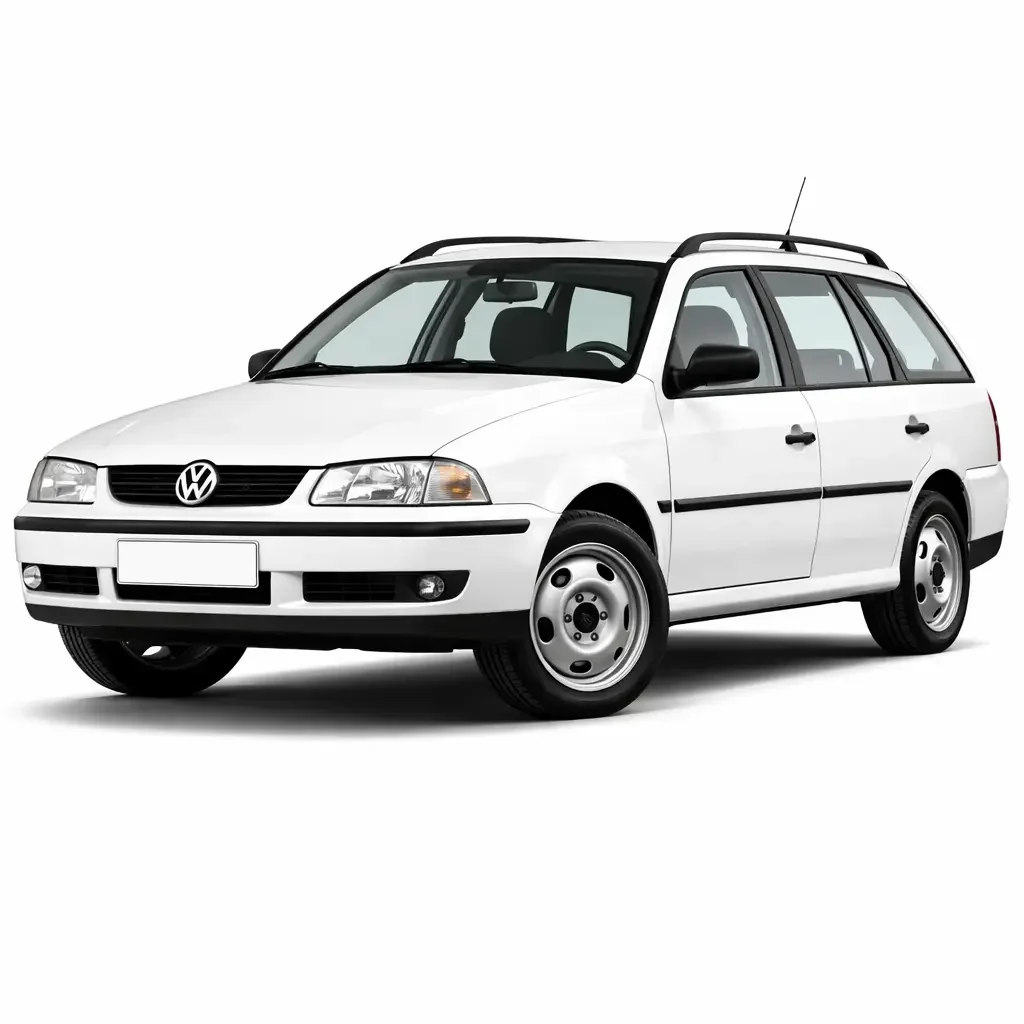
The Volkswagen Pointer hatchback and Pointer Station Wagon sold in Mexico from 1998 to 2005 are the passenger vehicle variants of the same BX/AB9-platform Gol family covered in the companion Pointer Truck guides. The hatchback is the Mexican market name for the Gol G2 (1998–1999) and Gol G3 (2000–2005). The Pointer Station Wagon is the Mexican market name for the Parati, the station wagon body variant of the same family, sold in Mexico from 1999 to 2005. Together they represent the largest portion of the Pointer fleet in Mexico during this window, outselling the pickup and accounting for the bulk of Pointer parts demand in the aftermarket.
This guide addresses the passenger variants specifically, with particular attention to the body configuration differences between the hatchback and the wagon, the rear suspension distinction between both passenger variants and the Pointer Truck, and the interior application split created by the Pointer City trim's use of G2 interior components inside a G3-generation vehicle. The platform identity, engine family, nameplate disambiguation, and the three-Pointer-nameplate confusion are covered in full in the companion 1999 Pointer Truck guide and are not repeated here.
Mexico Lineup Year by Year: 1998 Through 2005
The Mexican Pointer lineup evolved substantially within this window, introducing body styles, trim levels, and one additional engine variant at specific model years. A catalog that treats the 1998–2005 Pointer as a uniform application will assign wrong body style counts, wrong engine options, and wrong interior components to a significant share of vehicles in the fleet.
1998: Three-Door Hatchback Only
The Pointer launched in Mexico for the 1998 model year as a single body style: the three-door hatchback. It was available with one engine — the 1.8L AP producing 98 hp — and one transmission, the five-speed manual. The only option package combined air conditioning and power steering. No five-door hatchback, no wagon, and no pickup were available in this first year. A catalog entry assigning five-door hatchback body panels or wagon body panels to a 1998 Pointer is wrong; only three-door hatchback body components apply.
1999: Five-Door Hatchback and Pointer Station Wagon Added
For the 1999 model year, the five-door hatchback, the Pointer Station Wagon (Parati), and the Pointer Pick Up (Saveiro) were all added to the Mexican lineup. The three-door hatchback continued alongside the five-door. Three trim levels were established: Base, Comfort (A/C and power steering), and Luxe (14-inch alloy wheels, power windows, remote central locking, A/C, and power steering). The station wagon and pickup shared these trim levels with the hatchback. Rear glass, tailgate, and rear lamp assemblies for the three-door and five-door hatchbacks are different; the three-door uses a shorter rear aperture with a different glass geometry from the five-door.
2000: G3 Facelift, Three-Door Discontinued, Pointer GTI Added
The G3 facelift arrived in Mexico for the 2000 model year. All three-door hatchback versions were discontinued at this facelift; only five-door hatchbacks continued after 2000. The G3 brought new forward body panels, a new dashboard with blue-backlit instruments, and optional airbags and ABS. The Pointer GTI was introduced for 2000 as a three-door hatchback with the 2.0L AP engine producing 122 hp, 14-inch alloy wheels, all-disc brakes, and black sport seat upholstery. This means the GTI is the only three-door body style sold in the G3 window; all other body styles in the G3 period are five-door or wagon.
2002: Pointer City, Trim Renaming, Wolfsburg Edition
For 2002, a new entry-level trim called the Pointer City was introduced. The Comfort trim was renamed Trendline. The Luxe trim was renamed Comfortline. A Wolfsburg Edition special variant became available on the Pointer Pick Up and Pointer Station Wagon, featuring specially designed alloy wheels, double-projector headlights with color-matched bezels, and special exterior colors. The Pointer City is the trim most likely to cause interior component errors: the Car Origins Pointer history confirms that the Pointer City often used the pre-facelift G2 interior to reduce manufacturing costs, even though it was sold as a G3-generation vehicle with the G3 exterior. This means a 2002 or later Pointer City may carry a G2 dashboard inside a G3 body, making it the only application within the G3 window where G2 interior listings are applicable.
2005: Pointer Station Wagon and GTI Discontinued, Pointer Mi Introduced
In 2005 the Pointer Station Wagon and the Pointer GTI were both discontinued in Mexico. The former Trendline and Comfortline trims (excluding the City) were replaced by the Pointer Mi variant. The hatchback continued into 2006 and beyond under the G4 generation. Any catalog that carries Pointer Station Wagon or Pointer GTI entries into 2006 and later is assigning discontinued body styles and engine variants to years in which they were no longer sold.
Hatchback vs Wagon: Body Configuration Differences
The Pointer hatchback (Gol G2/G3) and the Pointer Station Wagon (Parati G2/G3) share the same BX/AB9 platform, the same wheelbase, the same front suspension, the same front brake specification, and the same AP engine family. They are the same vehicle from the A-pillar and firewall forward. Aft of the B-pillar, they are different vehicles with different body pressings, different glass, different rear lamp assemblies, and different tailgates.
The Parati station wagon has an extended rear body adding approximately 28 centimetres of length beyond the B-pillar compared to the hatchback. This extension raises the roofline and creates a larger rear cargo area with a reported 437-litre boot capacity versus the hatchback's 280 litres. The rear side glass, rear quarter glass, rear hatch glass, tailgate assembly, rear lamp clusters, and rear bumper are all Parati-specific. The hatchback's rear glass, rear hatch, rear lamps, and rear bumper do not cross to the wagon. A catalog that assigns hatchback rear body listings to the Pointer Station Wagon will generate wrong glass dimensions, wrong tailgate geometry, and wrong lamp assemblies on every rear body order.
Forward of the B-pillar, body panel cross-references between the hatchback and wagon are valid at the same generation level: G2 hatchback and G2 Parati share forward body panels within the same G2 specification; G3 hatchback and G3 Parati share forward body panels within the G3 specification. Windscreen glass, front door glass, front door assemblies, A-pillar structures, front fenders, hood, headlamps, and front bumper cross between the two body styles at their matching generation level.
Three-Door vs Five-Door Hatchback: The 2000 Discontinuation Boundary
Within the hatchback body style, the G2 window (1998–1999) sold both three-door and five-door configurations starting from 1999. The G3 facelift discontinued the three-door hatchback for all standard trims. The only three-door body remaining in the G3 period is the Pointer GTI, which was discontinued in 2005.
The three-door and five-door hatchbacks share the same front body forward of the B-pillar, but rear body panels, rear door assemblies, rear side glass, and rear lamp arrangements differ. A five-door rear door assembly does not cross to a three-door application. A three-door rear quarter panel does not cross to a five-door. Any catalog that lists a single hatchback rear body application for all Pointer hatchbacks without specifying door count will generate wrong rear body components for whichever configuration is not the catalog default.
The 1998 three-door is the simplest year: only three-door hatchback panels are applicable. From 1999, the G2 window carries both three-door and five-door rear body applications. From 2000, the G3 window carries only five-door rear body applications for standard trims, plus the three-door GTI as a separate application.
Rear Suspension: Torsion Beam on the Passenger Variants, Not Leaf Springs
The most important mechanical distinction between the Pointer passenger variants and the Pointer Truck is the rear suspension. The Pointer hatchback and Pointer Station Wagon both use a torsion beam rear axle with coil springs and telescopic shock absorbers. This is confirmed by the Notícias Automotivas Parati G3 article: “The Parati G3 had McPherson front suspension attached to the monoblock (that is, without subframe) and the rear came with a torsion axle with springs and telescopic shock absorbers.” The Parati Crossover 2005 technical specification sheet also confirms the torsion beam rear.
The Pointer Truck (Saveiro) uses a solid rear axle on leaf springs, a completely different design chosen for payload-carrying commercial duty. This means rear suspension components — rear springs, rear shock absorbers, rear wheel bearings, and rear axle assembly — do not cross between the Pointer Truck and the Pointer hatchback or Pointer Station Wagon. A catalog that merges the three Pointer body variants into a single rear suspension application will supply solid-axle leaf-spring components to a torsion-beam passenger car, or vice versa, on every rear suspension order.
The torsion beam rear suspension on the hatchback and wagon does cross freely between those two passenger body styles within the same generation. A Gol G3 hatchback rear spring crosses to a Parati G3 rear spring; both use the torsion beam architecture with the same mounting geometry. This cross-reference holds at the platform level between the Gol hatchback and the Parati wagon because both use the same rear axle design on the same wheelbase.
Engine Applications: 1.8L AP Standard, 2.0L AP GTI Only
The standard engine for all Pointer hatchback and Pointer Station Wagon applications in Mexico throughout this window is the 1.8L AP four-cylinder producing 98 hp, longitudinally mounted with a five-speed manual gearbox. No automatic transmission option was offered on any Pointer variant in Mexico during this period. No 1.0L engine was offered in Mexico on the passenger Pointer variants; the 1.0L was a Brazil domestic market option not exported to Mexico.
The only departure from the 1.8L AP is the Pointer GTI, which uses the 2.0L AP engine producing 122 hp. The GTI was available from the 2000 model year until it was discontinued in 2005. It was offered exclusively as a three-door hatchback. The 2.0L AP and the 1.8L AP are different displacements with different bore dimensions, different pistons, and different fuel system calibrations. Engine internal components and fuel system parts must not be merged between the two displacements. The GTI's 2.0L AP also includes all-disc brake specification — disc brakes at all four wheels — which distinguishes it from all other Pointer passenger variants that use front disc and rear drum.
Interior: The G2/G3 Dashboard Boundary and the Pointer City Anomaly
The G2 Pointer (1998–1999) uses the original G2 dashboard, a hard-plastic unit with basic instrumentation and a simple layout. The G3 Pointer (2000–2005) uses the G3 dashboard, a completely redesigned unit with blue-backlit instruments, improved ergonomics, and higher-quality materials that was widely praised in contemporary market reviews. These are different assemblies with different mounting structures; no G2 dashboard or instrument cluster crosses to a G3 application, and no G3 dashboard crosses to a G2 application.
The Pointer City trim introduced in 2002 creates a specific anomaly in the interior application profile. The Car Origins Pointer history documents that the Pointer City “often featured the pre-facelift G2 interior to reduce costs.” This means that a 2002, 2003, 2004, or 2005 Pointer City may carry a G2-era dashboard in a vehicle with a G3-era front body, G3 headlamps, and G3 external panels. Catalog entries that assign the G3 dashboard as the standard interior for all 2000–2005 Pointer applications will generate the wrong dashboard assembly for Pointer City vehicles. The Pointer City must be treated as a distinct interior application within the G3 window, with G2 interior listings applicable to the City trim and G3 interior listings applicable to all other G3 trims.
Steering wheel specification also follows equipment level within the G3 window. G3-period Pointer hatchbacks and wagons with optional airbags use a four-spoke airbag steering wheel; those without airbags use a three-spoke unit. The Pointer City's use of G2 interior components may extend to the steering wheel, which should be confirmed against the City-specific interior specification before any steering wheel listing is published for City-trim applications.
Brakes: Front Disc and Rear Drum Standard, All-Disc GTI Only
All standard Pointer hatchback and Pointer Station Wagon applications use front vented disc brakes and rear drum brakes. The front disc specification crosses to the Gol hatchback family and to the Parati wagon at the same engine and generation level. Rear drum specifications for the passenger variants cross freely between the hatchback and wagon; both use the torsion beam axle with the same rear drum architecture, unlike the Saveiro pickup which uses a different rear drum setup on its solid rear axle.
The Pointer GTI uses all-disc brakes at all four wheels. The rear disc specification on the GTI is specific to that application and does not cross to standard Pointer hatchback or wagon rear drum applications. A unified Pointer brake listing that does not distinguish the GTI rear disc from the standard rear drum will generate rear disc components for drum-equipped vehicles or drum components for the GTI.
Optional ABS was introduced with the G3 generation. ABS-equipped vehicles use an ABS modulator, ABS pump, and wheel speed sensors absent from non-ABS applications. The ABS brake master cylinder specification also differs from the non-ABS unit. ABS components must be flagged as equipment-level options, not standard fitments, throughout the G3 window.
Cross-Reference Summary: Hatchback, Wagon, and Truck
Hatchback and Wagon Cross to Each Other (Same Generation)
All forward body panels from A-pillar forward (same generation): headlamps, hood, front fenders, front bumper, front fascia, windscreen glass, front door assemblies, front door glass. All front suspension components: MacPherson struts, front springs, front control arms, front wheel bearings, front hubs. All front brake components: front disc rotors, front calipers, front brake pads. All AP engine service components under the same engine specification: timing belt, water pump, spark plugs, fuel filter, oil filter, air filter. Rear torsion beam suspension components: rear shock absorbers, rear springs, rear beam bushings.
Hatchback and Wagon Do Not Cross to Each Other
Rear body panels (wagon has extended rear body 28cm longer than hatchback), rear side glass, rear quarter glass, tailgate assemblies, rear hatch glass, rear lamp clusters, rear bumpers, and roof panels aft of B-pillar. These are body-style-specific and must not be merged in catalog entries.
Neither Passenger Variant Crosses to the Pointer Truck (Saveiro) at the Rear
Rear suspension: hatchback and wagon use torsion beam with coil springs; Pointer Truck uses solid rear axle on leaf springs. Rear shock absorbers, rear springs, rear wheel bearings, and rear axle assembly are all body-style-specific and share no cross-reference between passenger variants and the pickup. Rear drums on the passenger variants use a different mounting geometry from the rear drums on the Saveiro's solid axle.
Common ACES/PIES Catalog Mistakes
1. Applying solid rear axle leaf-spring suspension listings from the Pointer Truck to the Pointer hatchback or Pointer Station Wagon. The passenger variants use a torsion beam rear suspension. The pickup uses a solid rear axle on leaf springs. These are different designs with different component geometry. Rear springs, rear shocks, and rear wheel bearings listed for the Saveiro will not fit the torsion-beam passenger car application, and vice versa. This is the most consequential cross-body-style catalog error in the Pointer family.
2. Assigning five-door hatchback rear body panels to the 1998 Pointer. The 1998 Pointer was a three-door hatchback only. No five-door hatchback existed in the 1998 Mexico lineup. Any five-door rear body panel, rear door assembly, or five-door glass listing for the 1998 model year is wrong.
3. Applying three-door hatchback rear body listings to post-2000 Pointer hatchbacks other than the GTI. All standard hatchback trim levels discontinued the three-door body at the G3 facelift. Only the Pointer GTI continued as a three-door after 2000. A non-GTI Pointer hatchback rear body listing for 2001, 2002, 2003, 2004, or 2005 must specify the five-door configuration.
4. Assigning hatchback rear body panels to the Pointer Station Wagon. The wagon has a longer rear body, different rear glass geometry, a higher roofline, and a different tailgate design from the hatchback. Rear body panels, rear glass, rear lamps, and tailgate from the hatchback will not fit the wagon's extended rear structure.
5. Applying the G3 dashboard to all 2000–2005 Pointer applications, including the Pointer City. The Pointer City introduced in 2002 used G2-era interior components, including the pre-facelift dashboard, despite having the G3 exterior. Assigning the G3 blue-backlit dashboard to a Pointer City application will deliver the wrong assembly for a vehicle that physically carries G2 interior components.
6. Assigning the 2.0L AP engine or all-disc brake specification to standard Pointer hatchback or wagon applications. The 2.0L AP and all-disc brakes are exclusively GTI-specification items. All standard passenger Pointer variants use the 1.8L AP and front disc / rear drum configuration. A unified Pointer engine or brake listing that does not separate GTI from standard will generate 2.0L components for 1.8L vehicles or all-disc brakes for drum-rear vehicles.
7. Carrying Pointer Station Wagon or Pointer GTI listings into 2006 and later model years. Both were discontinued in Mexico in 2005. Any catalog entry assigning these body styles or the GTI engine specification to 2006 or later Pointer applications is listing vehicles that were no longer sold.
8. Listing the 1.0L engine as a Pointer hatchback or wagon application in Mexico. The 1.0L was offered in Brazil on the domestic Gol but was not exported to Mexico on the Pointer in this window. Mexico received only the 1.8L AP for standard applications. Any 1.0L engine listing for the Mexican Pointer hatchback or wagon is a Brazilian domestic market engine option being incorrectly assigned to the Mexican export application.
9. Applying ABS component listings as standard equipment for all G3 Pointer applications. ABS was optional on the G3, not standard. ABS pump, modulator, and wheel speed sensor listings must be flagged as equipment-level-specific and not applied universally across the G3 window.
Pre-Listing Checklist for the 1998–2005 Pointer Hatchback and Wagon
• Body style confirmed: three-door hatchback (1998–1999 G2 standard; 2000–2005 GTI only); five-door hatchback (1999–2005); five-door wagon / Pointer Station Wagon (1999–2005 only)
• Generation confirmed as G2 (1998–1999) or G3 (2000–2005); forward body panels (headlamps, hood, bumper, fenders) and dashboard separated by generation; G2 and G3 components not interchangeable
• Pointer City trim flagged as requiring G2 interior dashboard listing despite being a G3-generation vehicle; standard G3 dashboard listing excluded from City trim applications
• Engine confirmed as 1.8L AP for all standard applications; 2.0L AP for GTI only (2000–2005); 1.0L excluded as Mexican market does not carry this engine on the Pointer in this window
• Rear suspension confirmed as torsion beam with coil springs for both hatchback and wagon; Pointer Truck solid rear leaf-spring axle components excluded from all passenger variant rear suspension listings
• Rear brakes confirmed as drums for all standard applications; rear discs applicable to GTI only
• Front body cross-references confirmed between hatchback and wagon at matching generation level; rear body listings confirmed as body-style-specific with no cross-reference between hatchback and wagon
• Pointer Station Wagon and Pointer GTI terminal year confirmed as 2005; these applications must not carry into 2006 or later
• ABS components listed as optional equipment, not standard, throughout G3 window; airbag steering wheel and standard steering wheel listed as equipment-level-specific variations
• Rear torsion beam suspension components confirmed as crossing between hatchback and wagon within matching generation; do not cross to Pointer Truck solid rear axle
Final Take
The Pointer hatchback and Pointer Station Wagon are the volume applications in the Pointer family, and the catalog work for them is more complex in its body style splitting than the Pointer Truck guides because it must manage three-door versus five-door, hatchback versus wagon, G2 versus G3, GTI versus standard, and the Pointer City interior anomaly simultaneously. The single most important mechanical distinction to get right is the rear suspension: torsion beam with coil springs on the passenger variants, solid rear axle on leaf springs on the Pointer Truck. These two designs use completely different components and serve completely different load ratings.
The Pointer City interior note is the subtlest entry in this guide and the one most likely to generate quiet errors over time: a vehicle with G3 exterior panels and a G2 interior is genuinely unusual in catalog terms, and a researcher who assumes all 2002 to 2005 Pointer applications share the G3 dashboard will generate the wrong interior assembly for every City-trim order without any obvious symptom until the part arrives and does not fit the dashboard cavity. Flagging the Pointer City as a distinct interior application is the practical resolution.
Disclaimer
This guide is intended for catalog research, fitment analysis, and parts advisory reference. Production specifications, option availability, and regulatory compliance requirements vary by model year, regional market, and assembly date within any given window. Always confirm application data against vehicle identification number decoding, factory build sheets, and OEM parts documentation before finalizing a listing or parts recommendation. PartsAdvisory and its contributors are not responsible for fitment errors arising from catalog data that has not been independently verified against physical vehicle inspection or official OEM sources.