
Volkswagen Jetta SportWagen / Golf SportWagen (2010-2014): PQ35 Platform Fitment Guide for North America
Written by Arthur Simitian | PartsAdvisory
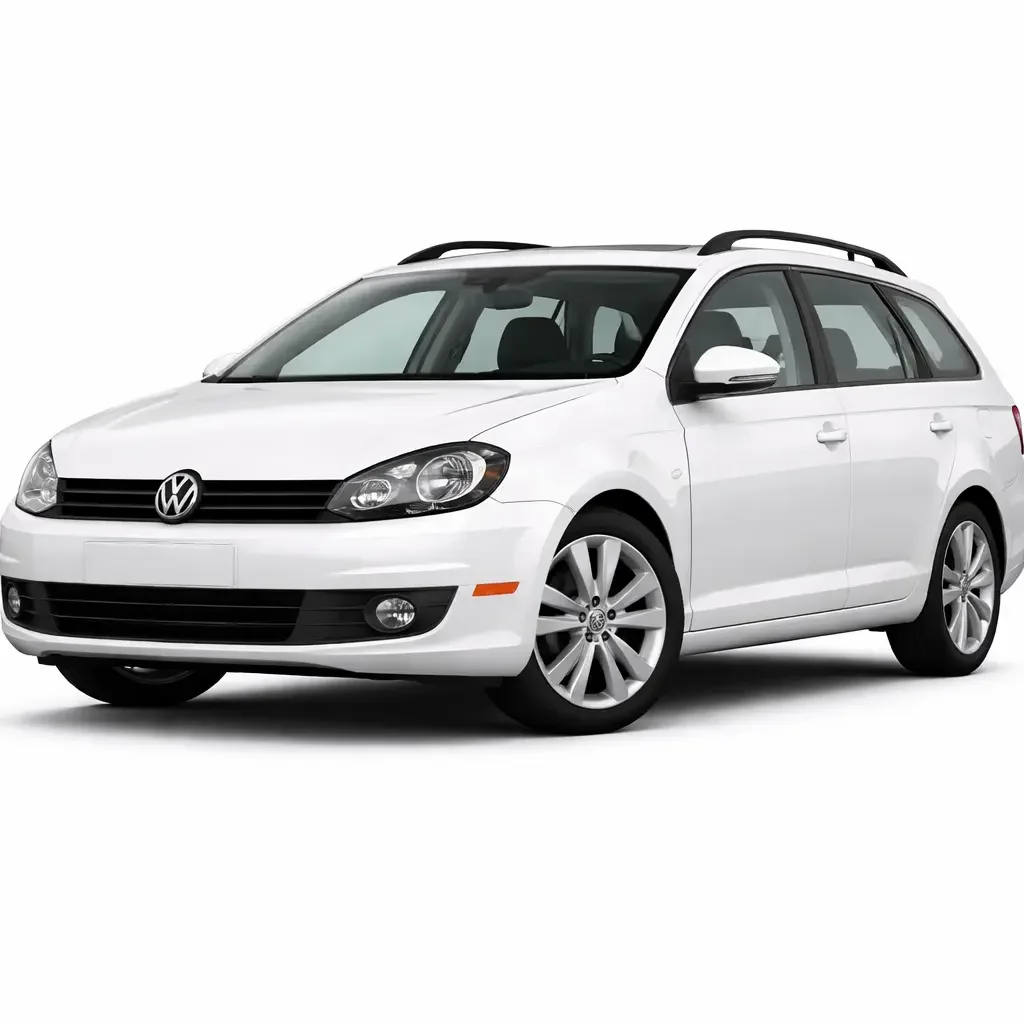
The station wagon sold in North America from 2010 through 2014 on Volkswagen's PQ35 platform carries different nameplates depending on the market. In the United States it is the Jetta SportWagen. In Canada it is the Golf Wagon. In Mexico it is the Bora Sportwagen in earlier production and the Golf SportWagen in later designation. All three nameplates refer to the same vehicle: a Golf-based five-door station wagon built at Volkswagen de Mexico in Puebla, sharing its body and platform with the fifth-generation Golf and Jetta while wearing the front fascia of the sixth-generation Golf from 2010 onward. This guide uses Jetta SportWagen as the primary reference when describing US-specific context and Golf SportWagen or wagon when addressing Canada or the vehicle generically, but all mechanical and platform content applies equally across all three market designations.
The platform and mechanical architecture of the 2010 through 2014 wagon are continuous with the Mk5 Golf. The body shell aft of the front doors, the rear cargo structure, the rear liftgate, and the rear suspension are Mk5 Golf Variant specifications throughout the window. The front fascia, front bumper, headlamps, and front clip were updated to the Mk6 Golf design when the wagon received its refresh in 2010. This creates a cross-reference situation that requires care: the front body components, hood, and front doors on the 2010 and later wagon cross to the Mk6 Golf and Mk6 Jetta at the front sheetmetal level, while the rear body components cross to the Mk5 Golf Variant rather than the Mk6 Golf Variant, which was not sold in North America.
Two engine families were available throughout the window: the 2.5-litre naturally aspirated five-cylinder gasoline engine and the 2.0-litre turbocharged common-rail TDI diesel engine. Each of these families carries its own internal engine code split driven by emissions jurisdiction, creating a total of four distinct engine code designations across the window. The catalog must address all four before any engine service component listing is correctly assigned.
This guide addresses the United States, Canada, and Mexico markets, noting where market distinctions create separate catalog entries.
Platform: PQ35 Mk5 Golf Variant Body, Mk6 Front Clip
The wagon is built on the PQ35 platform using the Mk5 Golf Variant body shell. The wheelbase, rear suspension geometry, rear body structure, rear glass, rear liftgate, and cargo area floor dimensions are all Mk5 Golf Variant specifications. The 2010 facelift updated the front clip only: the hood, front fenders, front doors, windscreen, headlamps, front bumper, and grille assembly changed to Mk6 Golf specifications. Nothing aft of the front doors changed at the 2010 facelift boundary.
This mixed body origin creates a specific cross-reference structure. Front struts, front control arms, front wheel bearings, and front brake components share the Mk6 Golf / Mk6 Jetta PQ35 front suspension family for 2010 and later production. Rear suspension components, rear shock absorbers, rear springs, and rear wheel bearings are Mk5 Golf Variant specifications and cross to the Mk5 Golf Variant within matching trim and spring rate rather than to the Mk6 Golf, which used a different rear body and rear suspension assembly as a four-door hatchback rather than a wagon.
The rear liftgate, rear liftgate glass, rear quarter glass, rear taillamp clusters, and rear bumper assembly are all Mk5 Golf Variant specific. A taillamp confirmed for the Mk6 Golf hatchback does not cross to the wagon. A rear liftgate confirmed for the Mk6 Golf hatchback does not cross to the wagon. These are different body configurations with different rear glass and liftgate geometries.
The wagon uses a MacPherson strut front suspension and a torsion beam rear axle. This rear suspension configuration is the same as the Mk5 Golf hatchback and differs from the Mk5 Jetta sedan, which used a multi-link independent rear suspension. A rear shock absorber or rear spring confirmed for the Mk5 or Mk6 Jetta sedan must not be applied to the wagon without confirming the suspension architecture, as the sedan and wagon used different rear axle designs.
The wagon is produced at Volkswagen de Mexico in Puebla throughout the 2010 to 2014 window. The VIN carries a 3VW prefix for all North American applications.
Naming Across Markets: Why One Vehicle Has Multiple Names in ACES
The Jetta SportWagen in the United States and the Golf Wagon in Canada are the same physical vehicle assembled at the same plant to the same specifications. The nameplate difference reflects a market-specific branding decision by VW of America and VW Canada rather than any mechanical or body distinction. For ACES catalog purposes, these are separate make-model entries that point to the same component specifications.
A component confirmed for the US Jetta SportWagen crosses directly to the Canadian Golf Wagon within matching engine, transmission, and model year specifications. No mechanical boundary separates the two market designations. The risk in catalog work is the opposite: a catalog that treats these as entirely separate vehicles without cross-referencing will generate gaps in coverage for buyers who search under one name but whose vehicle was cataloged under the other.
Engines: 2.5L Five-Cylinder and 2.0 TDI, Four Engine Codes
2.5-Litre Five-Cylinder: CBTA and CBUA
The gasoline engine offered in the wagon throughout the 2010 to 2014 window is the 2.5-litre naturally aspirated inline five-cylinder producing 170 hp and 177 lb-ft of torque. This engine is shared with the Mk5 and Mk6 Jetta sedan and the Mk6 Golf base trim, creating a broad cross-reference family for engine service consumables.
The 2.5-litre five-cylinder carries two engine codes in North America depending on the emissions certification jurisdiction. The CBTA is the 49-state LEV-certified variant. The CBUA is the PZEV-certified variant required in California and the states that adopt California emissions standards. This is the same jurisdiction-driven split as the CCTA and CBFA codes in the Mk6 GTI, and it creates the same catalog consequence: oxygen sensor count, secondary air system hardware, and oil pan assembly differ between CBTA and CBUA applications, while the majority of engine service consumables including oil filter, spark plugs, air filter, and coolant thermostat are shared between the two codes.
A catalog that assigns a single engine code for all 2.5L wagon applications will generate incorrect oxygen sensor listings for one jurisdiction group. Oxygen sensor, secondary air pump, and oil pan listings must confirm CBTA or CBUA before the specification is assigned.
2.0-Litre TDI: CBEA and CJAA
The TDI diesel engine offered in the wagon is the 2.0-litre turbocharged common-rail four-cylinder from the EA189 family, producing 140 hp and 236 lb-ft of torque. This is a timing belt engine. The timing belt, water pump, tensioner, and idler pulley assemblies are scheduled maintenance items, and the engine is an interference design. Timing belt failure causes catastrophic internal damage. Any timing drive service component listing for the TDI wagon must confirm the engine is a timing belt application before the specification is assigned, as this is a frequent source of confusion for buyers who assume all modern VW engines use timing chains.
Two engine codes exist in the North American TDI wagon application. The CBEA is the earlier code, used in the 2009 Jetta TDI sedan and carried into some 2010 wagon applications. The CJAA is the code used in 2010 and later wagons and in the majority of the Mk6-front-clip production run. The CBEA and CJAA share the majority of engine components including the oil pan, front and rear crankshaft seals, head gasket, connecting rod bearings, camshafts, oil filter, water pump, thermostat, fuel pump, injectors, fuel rail, turbocharger, and intercooler. The components that differ between CBEA and CJAA include the cylinder head, valve cover, crankshaft specification, oil pump drive shaft length, fuel filter specification, and the DPF and NOx catalyst assembly configuration. The CBEA uses a combined one-piece DPF and NOx catalyst assembly. The CJAA uses a two-piece DPF and NOx catalyst assembly connected with a v-band clamp.
For routine service including timing belt kit, oil service, air filter, fuel filter, and glow plugs, the CBEA and CJAA must be confirmed as separate entries for components that differ at the cylinder head and exhaust aftertreatment level. Timing belt kits, while covering the same external drive components, must be confirmed as applicable to the specific code because the 77mm versus 100mm oil pump drive shaft difference between the CJAA and CBEA respectively can affect the balance shaft module specification. Fuel filter part numbers differ between CBEA and CJAA and must be confirmed before assignment.
The TDI wagon is subject to the Dieselgate EA189 emissions settlement affecting the 2.0-litre TDI with the defeat device software. All 2010 through 2014 North American 2.0 TDI wagon applications using CBEA or CJAA engine codes are within the affected population. This does not change the mechanical component catalog entries but is relevant context for any catalog service note accompanying emissions system components on these applications.
Transmissions: 09G Automatic, 02Q Manual, and 02E DSG
The wagon was offered with three transmission configurations across the window, varying by engine.
The 2.5-litre five-cylinder applications used the six-speed 09G Aisin-sourced conventional automatic as the automatic option and the six-speed 02Q manual as the manual option. The 09G uses conventional automatic transmission fluid and a conventional filter service interval. The 09G fluid specification and filter part number must be confirmed as specific to the 09G before any listing is assigned, as the 09G and the DSG 02E are incompatible service items.
The TDI applications used the six-speed 02Q manual or the six-speed 02E DQ250 DSG dual-clutch automatic. The DSG in the TDI wagon uses dedicated DSG fluid at the VW G 052 171 specification rather than conventional automatic fluid. DSG fluid and filter service for the TDI wagon is a separate catalog entry from the 09G conventional automatic service for the 2.5L wagon. A DSG fluid listing applied to a 2.5L 09G application, or a conventional automatic fluid listing applied to a TDI DSG application, is assigning the wrong fluid type to the wrong transmission.
The 02Q manual transmission in both the 2.5L and TDI applications uses different clutch specifications. The 2.5L five-cylinder uses a flywheel and clutch specific to the five-cylinder engine, which is not the same as the four-cylinder TSI flywheel used in the Mk6 GTI 02Q. The TDI 02Q uses a flywheel and clutch specific to the diesel application. Clutch and flywheel listings for the wagon manual must confirm engine family before the part number is assigned.
Rear Cargo Area and Wagon-Specific Body Components
The wagon's cargo area behind the rear seat measures approximately 32.8 cubic feet, expanding to approximately 66.9 cubic feet with the rear seat folded, making it one of the most practical cargo platforms in the compact wagon segment of this era. The cargo area floor, rear seat fold mechanism, and cargo cover are wagon-specific. A cargo floor or cargo cover confirmed for the Mk6 Golf hatchback does not cross to the wagon.
The rear liftgate uses a conventional non-power lift mechanism on base trims. Higher trims may include a power liftgate option. Power liftgate actuator components are trim-specific and do not cross to manually operated liftgate applications.
Common ACES/PIES Catalog Mistakes
The first error is applying Mk6 Golf rear body components to the wagon. The wagon uses a Mk5 Golf Variant rear body. Rear taillamp clusters, rear quarter glass, rear liftgate, and rear bumper confirmed for the Mk6 Golf hatchback do not fit the wagon body.
The second error is applying Mk5 or Mk6 Jetta sedan rear suspension components to the wagon. The Jetta sedan uses a multi-link independent rear suspension. The wagon uses a torsion beam rear axle. Rear shock absorbers and rear springs from the sedan do not cross to the wagon.
The third error is assigning a single 2.5L engine code application without separating CBTA and CBUA. Oxygen sensor count, secondary air system hardware, and oil pan differ between the two codes. Emissions hardware listings must confirm jurisdiction-based engine code before assignment.
The fourth error is assigning CBEA and CJAA as fully interchangeable for all TDI service components. The cylinder head, valve cover, crankshaft, oil pump drive shaft, fuel filter, and exhaust aftertreatment assembly differ between the two codes. Listings for these components must confirm engine code before assignment.
The fifth error is applying a timing chain service kit or no timing drive service notation to the TDI wagon. The 2.0 TDI uses a timing belt. It is an interference engine. Timing belt replacement at the manufacturer-specified interval is a required maintenance item. A catalog that omits the timing belt listing for the TDI wagon, or that applies a chain tensioner listing instead, is generating a serious service gap.
The sixth error is applying DSG fluid to a 2.5L wagon with the 09G conventional automatic, or conventional automatic fluid to a TDI wagon with the 02E DSG. These are different transmission types requiring incompatible fluid specifications. The transmission type must be confirmed before any fluid or filter listing is assigned.
The seventh error is treating the US Jetta SportWagen and Canadian Golf Wagon as mechanically distinct vehicles requiring separate component part numbers. They are the same vehicle under different nameplate designations. Components confirmed for one cross directly to the other within matching engine, transmission, and model year specifications.
The eighth error is applying Mk6 Golf front suspension or front brake components to a pre-2010 wagon application. The 2010 facelift updated the front clip to Mk6 Golf specification. Pre-2010 wagon front suspension was Mk5 Golf specification. Any wagon application at the 2009 or earlier model year must use Mk5 front suspension and brake cross-references, not Mk6.
The ninth error is applying a TDI clutch and flywheel confirmed for the 2.5L five-cylinder application, or vice versa. The diesel and gasoline engine families use different clutch and flywheel specifications. Engine family confirmation is required before any clutch or flywheel listing is assigned.
The tenth error is applying a 2.5L oil filter to a TDI application or a TDI oil filter to a 2.5L application. The two engines use different oil filter specifications and different oil viscosity grades. The 2.5L uses VW 502 00 spec oil. The TDI uses VW 507 00 spec oil. These are different formulations and must not be cross-referenced.
Pre-Listing Checklist for the 2010-2014 Jetta SportWagen / Golf SportWagen
Market nameplate confirmed as Jetta SportWagen (United States), Golf Wagon (Canada), or Golf SportWagen / Bora Sportwagen (Mexico) before catalog entry header is assigned; mechanical specifications confirmed as identical across all three market designations.
Platform confirmed as PQ35 Mk5 Golf Variant body with Mk6 front clip from 2010 onward; front body components confirmed as Mk6 Golf cross-reference family; rear body components confirmed as Mk5 Golf Variant cross-reference family; no Mk6 Golf hatchback rear body component applies.
Rear suspension confirmed as torsion beam; no Mk5 or Mk6 Jetta sedan multi-link rear suspension component applies.
Engine confirmed as 2.5L five-cylinder or 2.0 TDI before any engine service listing is assigned.
For 2.5L applications: engine code confirmed as CBTA (49-state) or CBUA (CARB/PZEV states) before oxygen sensor, secondary air system, and oil pan listings are assigned; VW 502 00 oil specification confirmed.
For TDI applications: engine code confirmed as CBEA or CJAA before cylinder head, valve cover, fuel filter, oil pump drive shaft, and exhaust aftertreatment listings are assigned; timing belt confirmed as the timing drive system throughout; timing belt kit, water pump, tensioner, and idler confirmed as required maintenance items; VW 507 00 oil specification confirmed.
Transmission confirmed as 09G six-speed conventional automatic (2.5L only), 02Q six-speed manual (both engines), or 02E DQ250 DSG (TDI only); fluid specification confirmed as 09G conventional ATF, DSG G 052 171, or manual gear oil before any fluid or filter listing is assigned; DSG and conventional automatic fluid confirmed as incompatible and not cross-referenced.
Clutch and flywheel confirmed as engine-family-specific before any clutch kit listing is assigned; 2.5L and TDI clutch specifications confirmed as different and not interchangeable.
Production confirmed as Puebla, Mexico throughout; VIN prefix confirmed as 3VW.
Final Take
The 2010 to 2014 Jetta SportWagen and Golf Wagon window is defined by two parallel catalog challenges that are both driven by the same underlying structure: every major component family in this vehicle has an internal split that requires confirmation before a listing is correct. The naming split across US and Canadian markets, the CBTA/CBUA split in the 2.5L gasoline application, the CBEA/CJAA split in the TDI application, the 09G/02Q/02E transmission split across engine families, and the Mk5 rear body versus Mk6 front body architectural split all require active confirmation rather than default assumptions.
The most consequential of these for service safety is the TDI timing belt. The 2.0 TDI is an interference engine with a timing belt replacement interval. A catalog that fails to list the timing belt as a scheduled service item for TDI wagon applications, or that substitutes a chain tensioner listing because other contemporary VW engines use chains, is creating a gap that translates directly to engine damage in the field. The timing belt requirement for the EA189 TDI applies throughout the full 2010 to 2014 window without exception for either engine code.
The naming situation across markets is the second area most likely to generate quiet coverage gaps. A catalog built from US dealer data that assigns all components exclusively to the Jetta SportWagen nameplate without cross-referencing to the Golf Wagon will leave Canadian buyers unable to find fitment data for a mechanically identical vehicle. The reverse applies equally. Both nameplates must be maintained as linked entries.
Disclaimer
This guide is intended for catalog research, fitment analysis, and parts advisory reference. The Dieselgate EA189 settlement affects all 2010 through 2014 North American 2.0 TDI applications covered in this guide. Service and emissions component specifications may be subject to recall, technical service bulletin, or settlement-related updates. Always confirm application data against vehicle identification number decoding, factory build sheets, and current OEM parts documentation before finalizing a listing or parts recommendation. PartsAdvisory and its contributors are not responsible for fitment errors arising from catalog data that has not been independently verified against physical vehicle inspection or official OEM sources.